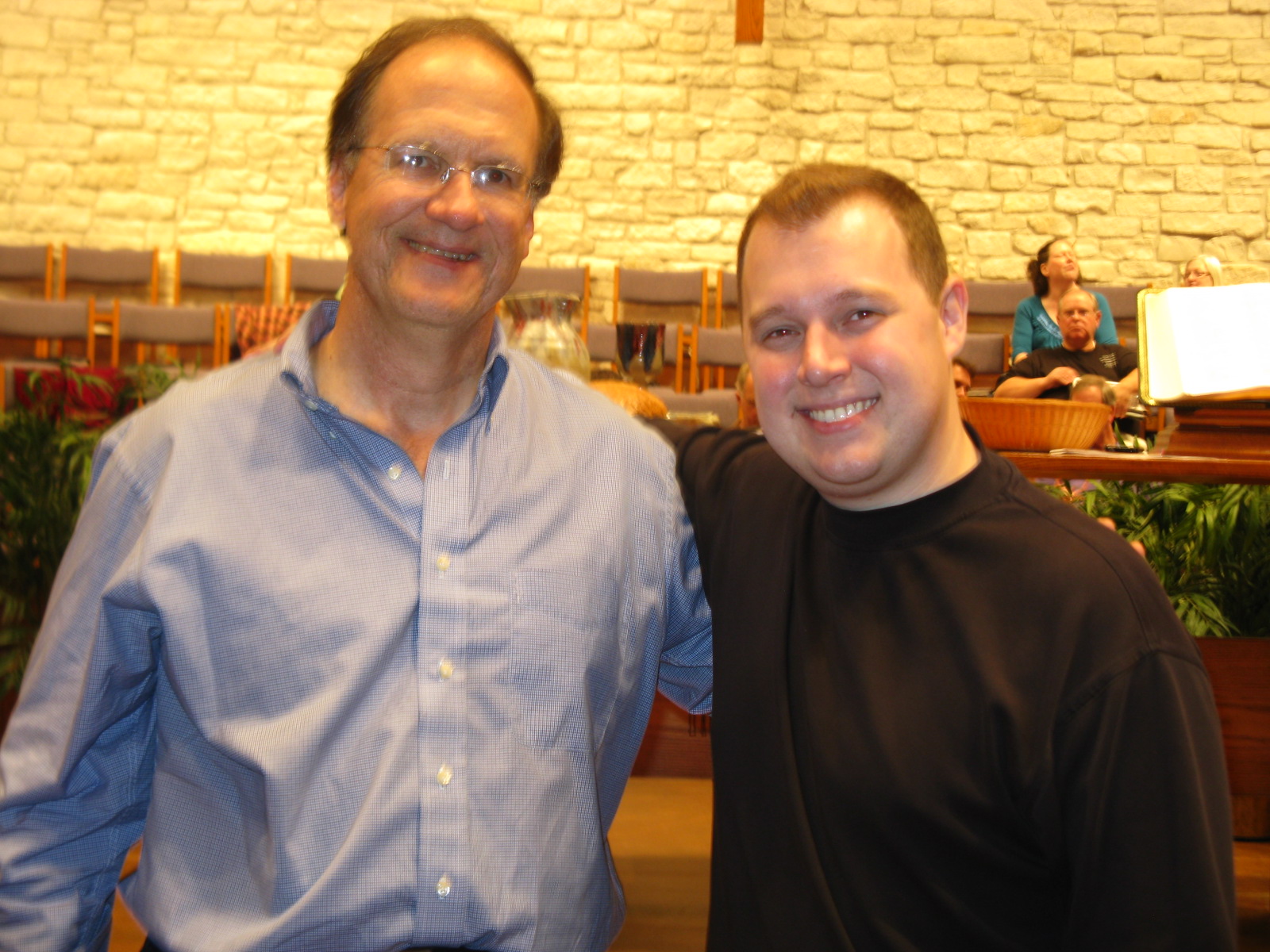
11.15.2010
AVAE concerts!
East Meets West concert season accomplished! Quite a satisfying process, this program. OMG the Russian! I've done my share of Russian--Tchaikovsky Mazeppa,* with Opera Orchestra of New York (Maestra Queler appears to be grooming a successor) and Kirov Opera principals, the Scheherazade concert with the Austin Symphony a few years back, portions of Rachmaninoff Vespers+ and various assorted pieces everywhere. The first half of the program, primarily the Sviridov, was as much Russian as all those put together. No kidding. Sviridov was a demon composer. And so very, very charming.
*a "cosmic fire!" (Kyr's dynamic marking for the final chord of Let There Be Music) occurence, Mazeppa was remarkable because 1) my daughter was a member of Princeton Pro Musica that year, and it thrilled me no end to sing in Carnegie Hall with her grandmother in attendance; and 2) it was the last concert my mom attended. She died three weeks later. Yeah, heavy duty.
+After singing the entire piece (in English) with the wonderful Frances Slade and Princeton Pro Musica on several occasions, including in a verrrrry old, ornate Greek Orthodox church in Jersey City, AND hearing the St. Petersburg Academy Choir sing it in Russian, I instructed my daughter that I would like to have it sung at any memorial of which I might be the central figure.
As ecstatic as the music was, my life between those intense rounds of singing this week was just as exciting. Baby face time is most amazing and nourishing, and being with a friend who knew and admired my mom was just as fulfilling. He shared stories of my mom interviewing Molly Ivins, and stepping in for him to interview Emeril Lagasse on CRIS radio in Chicago and his kind regrets about mother's death.
Precious music, precious beings, precious stories.
11.10.2010
Rehearsal notes 11/8 and 11/9--Robert Kyr/Ryan Heller
11/8/10--Last night's rehearsal was at the Oak Hill United Methodist Church in the sanctuary where we will perform. It went well, the group really pulling together. Very comforting to get a feel for the acoustics--how to listen and how to produce sound for that space. The Very Big Deal, however, was Tuesday night's rehearsal.
11/9/10--Composer Robert Kyr, whose "Let There Be Music" is featured on the program, worked with the ensemble this evening, and will be in attendance both performances. He was most enthusiastic about the preparation we'd done under the direction of Ryan Heller, AVAE's musical director.
We had an exhaustive, exhausting, fabulous time regrouping to the physical architecture of the piece. He gave us valuable insight into the piece on common ground and supercharged the response of the chorus. Kyr, professor of composition and theory at the University of Oregon, morphed rehearsal into a master class.
Firstly, we did a few minutes of yoga, although he didn't call it that. Progressive upward stretches to release the tension in the vocal mechanism to produce our best sound. And that it did. I think we all listened "with bigger ears," as Ryan said, and certainly put that piece (mostly--a few things to work out Thursday) where it needs to go. I love working with composers--and they love hearing their work done the way they want it done. And done, in Watermelon Sugar.
From Kyr: "overtones are the DNA of music..." "think of a double helix when you sing these interweaving lines..." let there be music--let there be light--let there be breath." The piece is quite sonorous. It is also quite visual. It will be a great treat for everyone, audience and performers alike.
Regrouping the architecture: Yes, we physically did this--moved the ensemble right out front in 2 lines, with the various voice sections re-positioned. Kyr explained the specific structures to the group, and placed sections that interweave closer together. It makes sense in this piece. We learned what to listen for, and we listened better. And the closer we are to the audience, the more involved they will be.
That's what music is, after all. Equal parts listening and singing/performing. It's the magic of chamber ensembles. The most interesting (to me) choral music and certainly the biggest challenge. I'd like to see all my friends and relatives there, and lots of new folks who love music and are interested to hear a fabulous ensemble perform wicked-good stuff.
Visit Chorus Austin for concert details and tickets.
Labels: Austin Vocal Arts Ensemble, AVAE, Robert Kyr, Ryan Heller
11.12.2008
Concert of Hope--AVAE performs 11/13/08
The Austin Vocal Arts Ensemble sings "Poetic Voices," settings by contemporary composers of Shakespeare, Donne, Spenser, and other greats tomorrow night at Hope Presbyterian Church 8:00 p.m. John McLean weaves the lush sounds of Vaughn Williams, dello Joio (who passed away this year after a long, productive life in music), Barber, and Whitaker, calling on the considerable talent in the ensemble. A big hug for Nick and Julie Boltz, music directors and fabbo singers/pianist. They hosted AVAE rehearsals as well, allowing the ensemble plenty of time to learn the music in a superb performance space.
This has been a lovely concert period, getting to know a new director and new singers. John (or Mac) is a musical dynamo, with a vast amount of knowledge, warm-up and rehearsal technique, and visceral understanding of the gestalt of music. His tempi are always intuitive, and he brings his singers into his aura to take particular care in their execution of the piece, on every level. We always have a comfortable, satisfying workout. Or at least I do, from how well the group sounds, I assume most everyone else does too.
There's a run-out concert at the Festival Institute at Round Top this Saturday. So if you don't catch the program here, you can take a nice drive in the country for the Choral Festival.
Now, to load up my black folder...
4.06.2008
AVAE's American Tapestry concert
The extended drought has severely limited the bluebonnets this year. As you can see from the photo, they're sparse. If we'd had enough rain last fall and winter, the frame would be filled with a deep saturated blue, with contrasting Indian Paintbrushes scattered throughout. They are companion plants, and you won't see one without the other, except perhaps in a drought. Few Mexican Blankets, either.
So what does any of this have to do with Austin Vocal Arts Ensemble, you may ask? Well, some of the best music happens during bluebonnet time, however lush or sparse the blooms. The concert was very satisfying, good crowd, pitch stayed up pretty well, although I hate flatting at all.
A new opportunity presented itself: I've been hired by b5media to blog as The Good Musician, and went live on March 31. I can still write about music on Fried Okra Productions, and am free to publish any post from TGM a month later. You might as well go over to TGM, check it out, give me your ideas, contacts, and critique. I'm open for suggestions--anything having to do with music.
Learning curve on WordPress, I like it. It will take a bit to get up to speed. I'd love to hear about WP tips or advice--anything to fine tune the digital media, it's a frisky pony at present.
8.29.2007
Yay for Brahms!

Johannes Brahms (1833-1897) was a musician's musician and composer. He practiced counterpoint (think Bach Two-Part Inventions) for two hours every day before he put pen to manuscript to compose his own work. I call him the hemiola king. Makes singing interesting. Basically, it's shifting the metric pattern from a 3/4 or 6/8 (triple) time signature to what sounds like a string of duples. In other words, you're banging along 1 2 3 1 2 3 and the accent shifts to 1-2 3-1 2-3. You have to hear it...
At any rate, tonight was first rehearsal of the season for the Austin Vocal Arts Ensemble (AVAE), and we're doing a full program of Brahms, featuring the Liebslieder Waltzes. Brahms' style was Classical Romantic, rather than full-out Romantic. He respected the older forms of music (imitation, canon, fugue, et al) and adapted them to structure his work, as opposed to say, Wagner, who wrote what is known as program music--sometimes called a tone poem--which tells a story, or conjures an image, and may be through composed, which simply means the architecture doesn't divide up into neat sections. Think Prelude and Liebestod--restless movement away from a tonal center, never quite landing on a cadence (think the A-men at the end of most hymns).
Brahms wrote for nearly every genre except opera. His lieder (songs) are de rigeur for any singer, and his piano pieces are difficult, but supremely satisfying--you get to use the full range of the piano, and thunder away all your anger or depression. The symphonies are quite pleasant, but perhaps his best known work is Ein Deutsches Requiem (The German Requiem) for chorus and orchestra, which regularly shows up in every chorus' season. It isn't religious so much as spiritual. His tonalities reach deep inside your psyche and resonate with exquisite passion for the listener and the singer.
If you are in Austin on November 8, come listen. You'll hear lots of hemiola :)